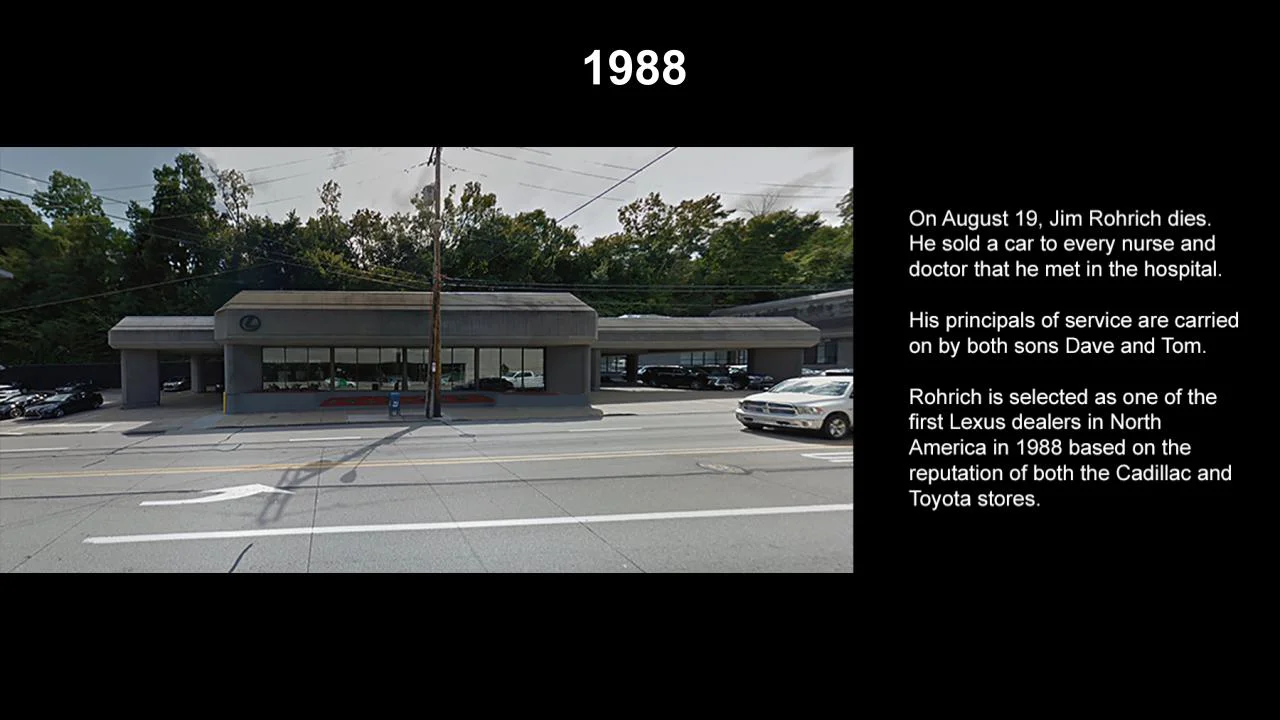
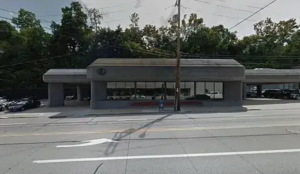
 In 1988, the Rohrich family faced the loss of Jim Rohrich, who passed away on August 19. Known for his dedication to both people and business, Jim’s commitment to service remained evident in every interaction, even during his time in the hospital. After his passing, his principles of exceptional customer care and integrity were carried forward by his sons, Dave and Tom. That same year also marked a major milestone for the company, as Rohrich was selected as one of the first Lexus dealers in North America, a recognition earned through the strong reputation established by both the Cadillac and Toyota stores.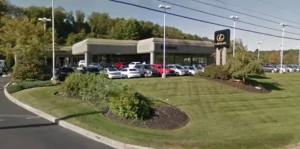
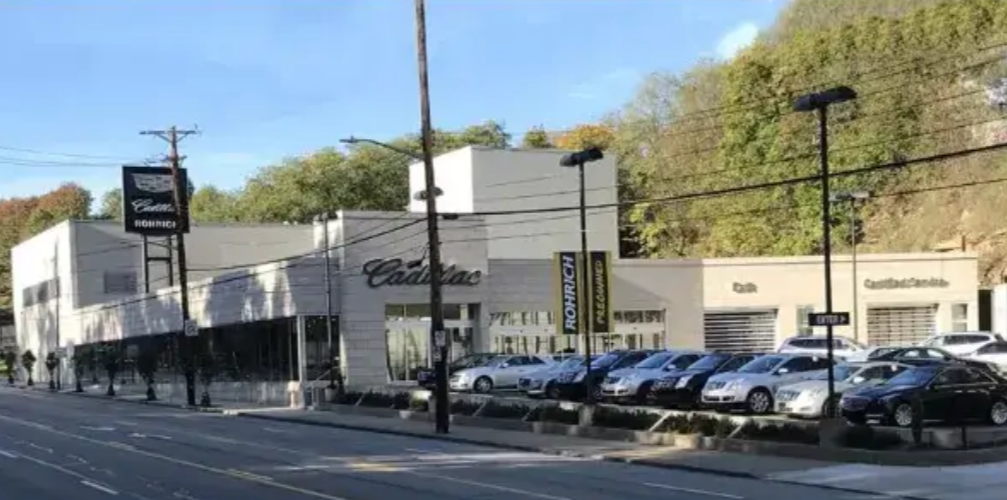


Rohrich Automotive Mission and Values:
Since 1920, from the humble beginnings of what is now The Rohrich Automotive Group, the Rohrich family has always understood that customers have a choice. They can choose where they purchase their vehicles and where they service them. That is why Rohrich has never taken for granted the trust placed in them by every customer who walks through their doors. Their mission has always been to provide the finest sales and service experience possible, built on a foundation of honesty, integrity, and genuine care. It continues to be both an honor and a privilege for the Rohrich family to serve their guests, and they remain committed to earning and keeping that trust every day.
1912 –
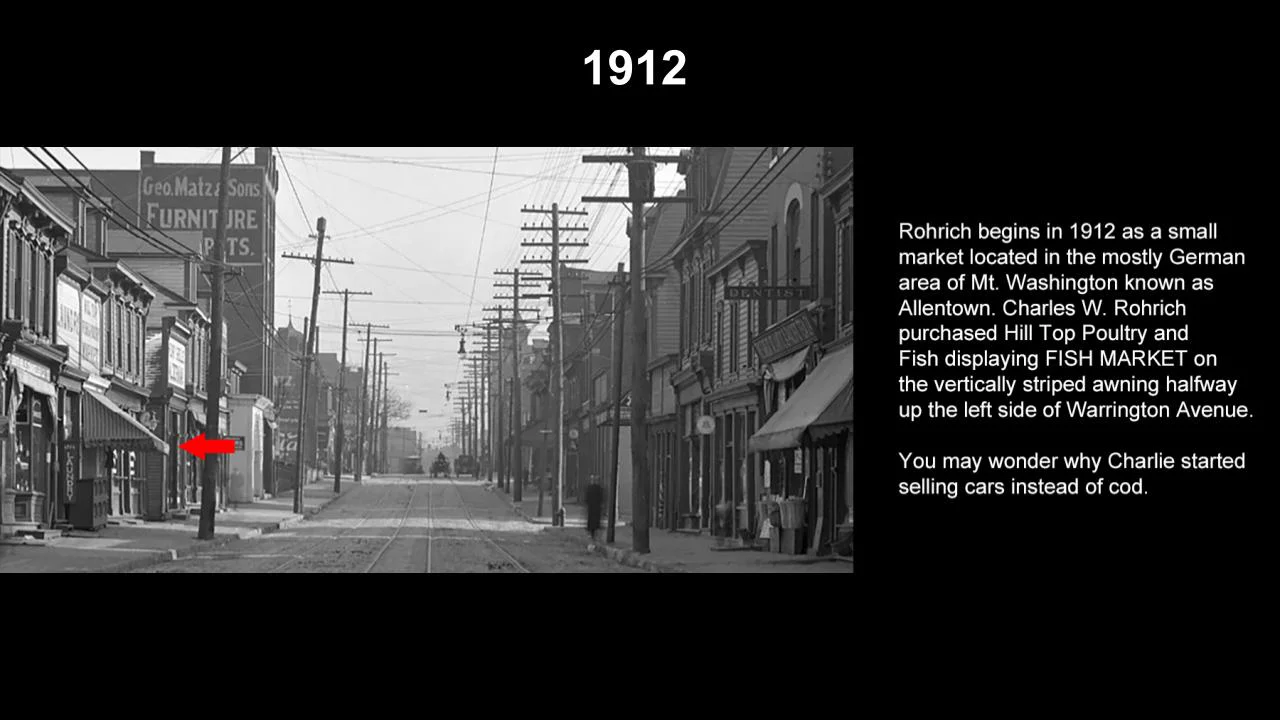
In 1912, Rohrich began as a small market in the predominantly German neighborhood of Mt. Washington, specifically in the area known as Allentown. Charles W. Rohrich purchased Hill Top Poultry and Fish, operating a fish market along Warrington Avenue, where a vertically striped awning marked the storefront. What started as a humble local business laid the foundation for what would eventually become The Rohrich Automotive Group. As the story goes, this early chapter also raises an interesting question: what led Charlie to transition from selling fish to selling cars?
1917 – 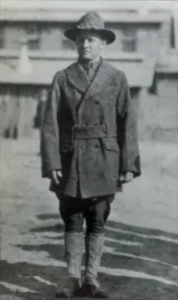
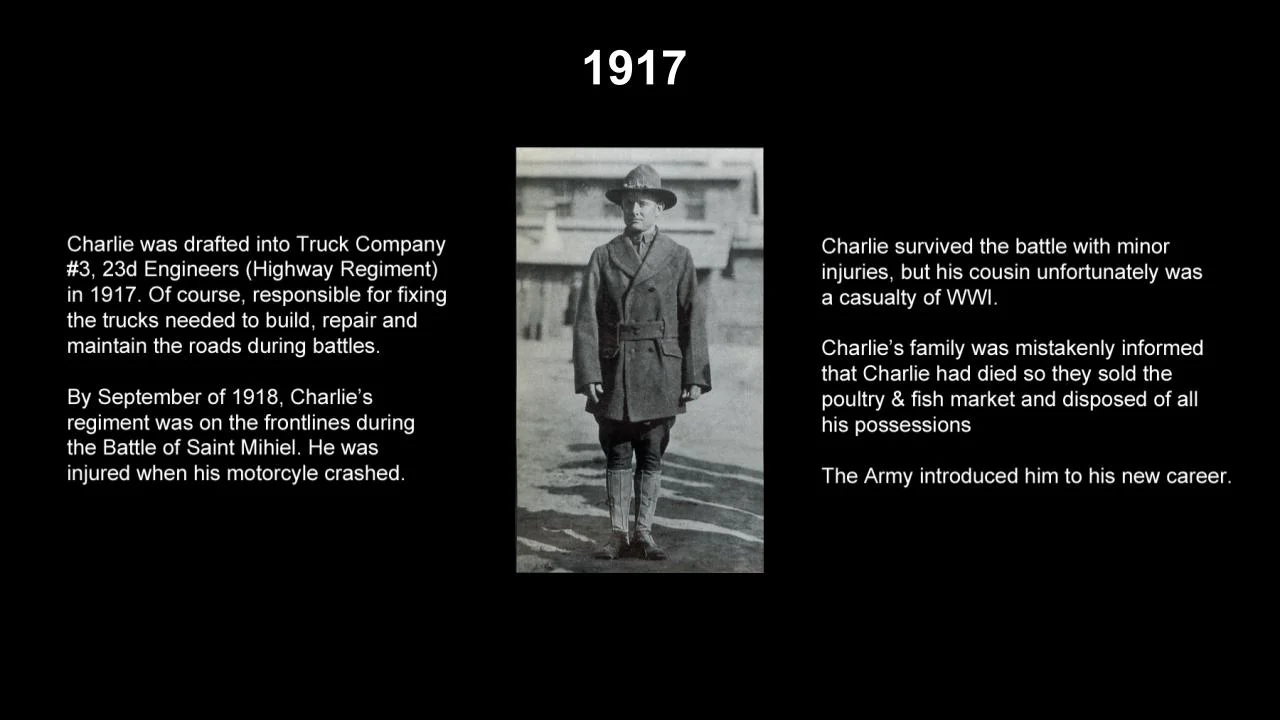
In 1917, Charlie Rohrich was drafted into Truck Company #3 of the 23rd Engineers, also known as the Highway Regiment. His responsibilities included repairing and maintaining the trucks used to build, fix, and support roads during wartime. By September 1918, his regiment was on the front lines during the Battle of Saint Mihiel, where Charlie was injured in a motorcycle crash. He survived the war with only minor injuries, though his cousin sadly lost his life in World War I. Back home, Charlie’s family had mistakenly been told that he had died, so they sold the poultry and fish market and disposed of all his belongings. While that chapter ended in loss and uncertainty, Charlie’s time in the Army introduced him to the skills and experience that would shape his future career.
1920 –
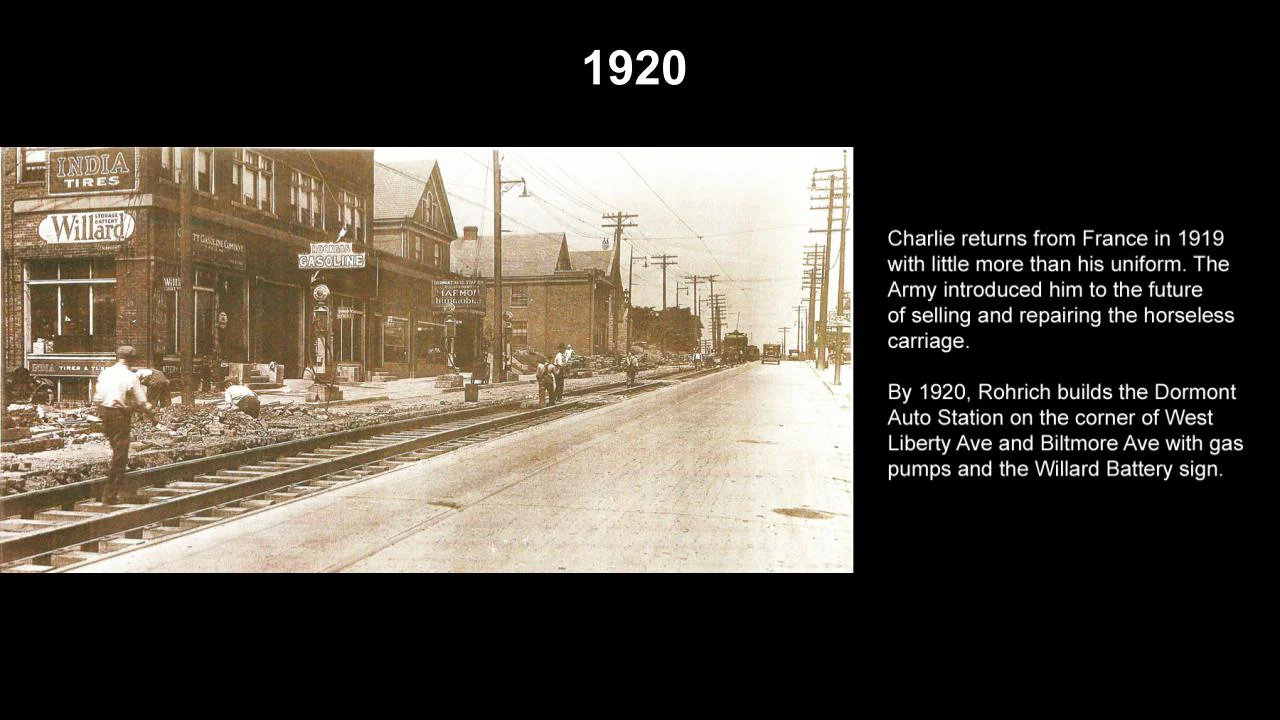
After returning from France in 1919 with little more than his uniform, Charlie Rohrich began building the future that would shape the Rohrich name for generations. His time in the Army had introduced him to the growing world of selling and repairing the horseless carriage, sparking the beginning of a new career path. By 1920, Rohrich had established the Dormont Auto Station at the corner of West Liberty Avenue and Biltmore Avenue, complete with gas pumps and the recognizable Willard Battery sign. This marked an important step in the company’s transition from humble beginnings to a lasting presence in the automotive industry.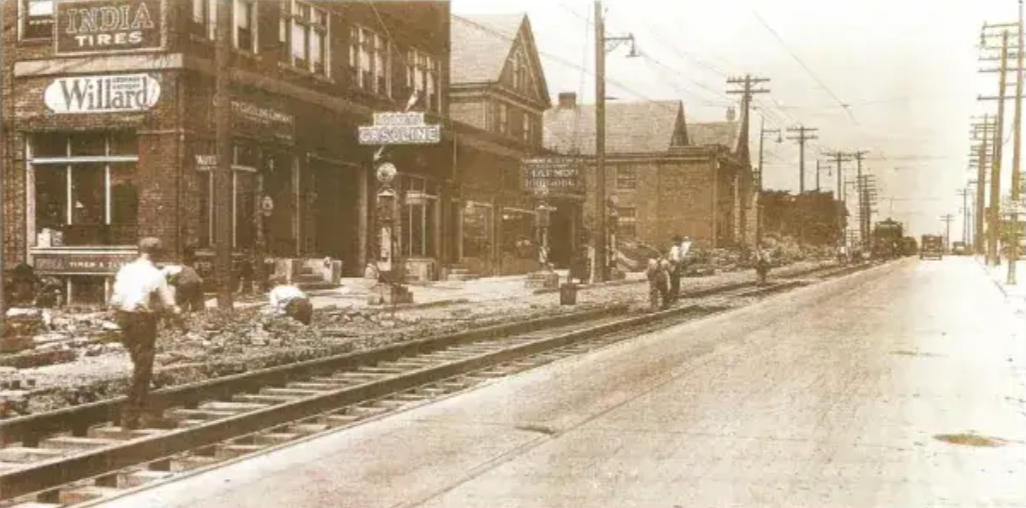
1923 –
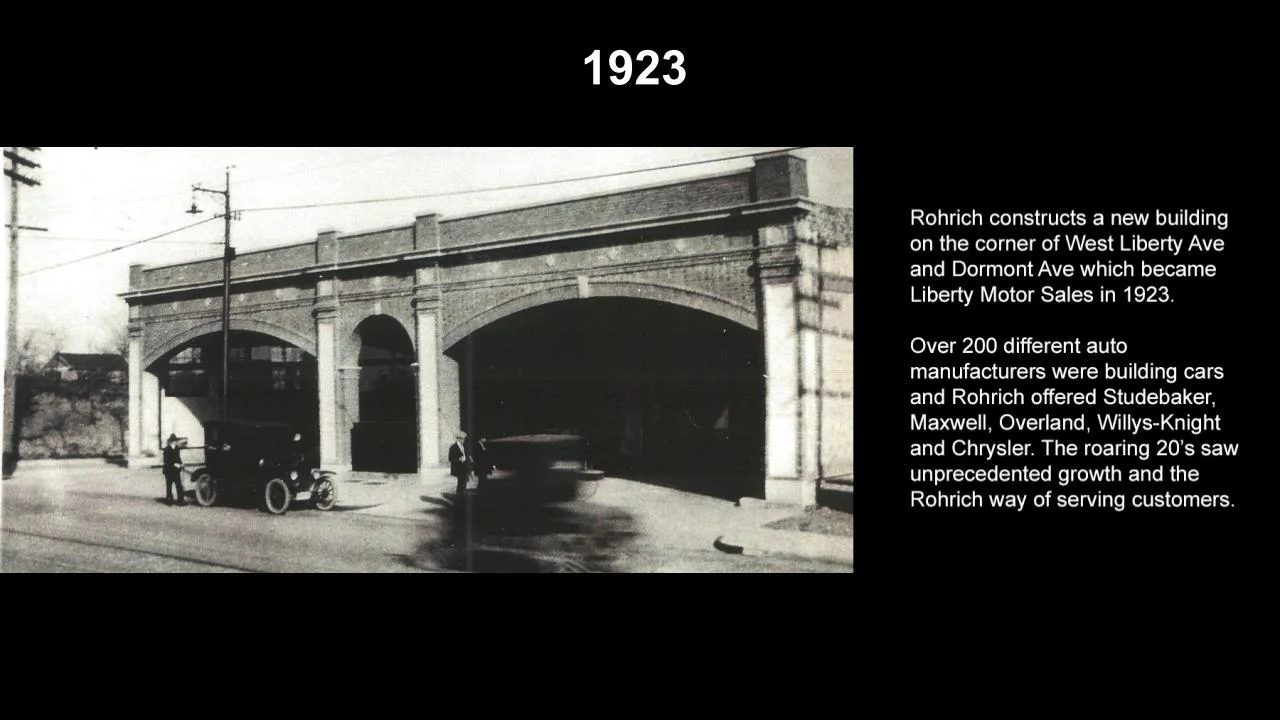
By 1923, Rohrich continued its growth by constructing a new building at the corner of West Liberty Avenue and Dormont Avenue, which became known as Liberty Motor Sales. During this time, the automotive industry was rapidly expanding, with more than 200 manufacturers producing vehicles. Rohrich proudly offered a variety of brands, including Studebaker, Maxwell, Overland, Willys-Knight, and Chrysler. The booming economy of the Roaring Twenties fueled unprecedented growth, helping establish the Rohrich approach to customer service and setting the foundation for the company’s continued success.
1928 –
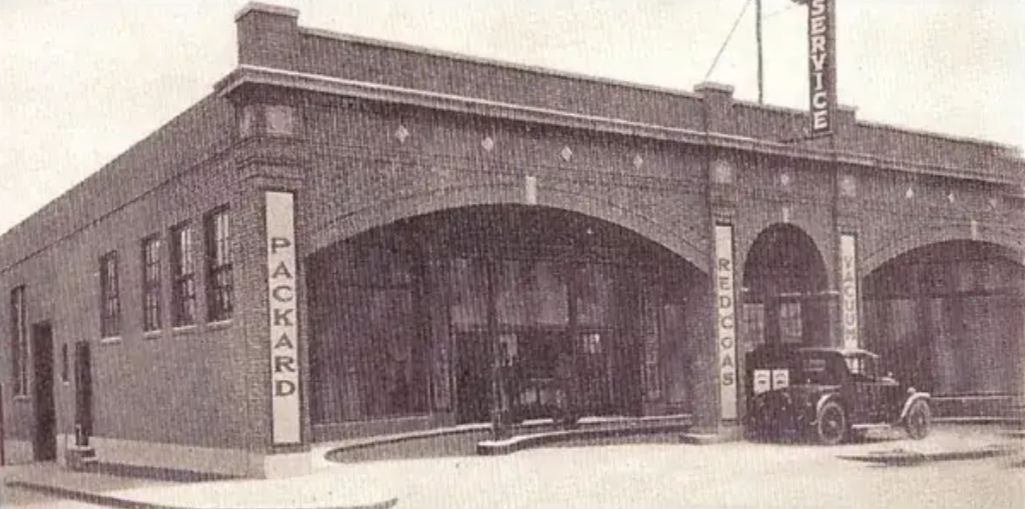
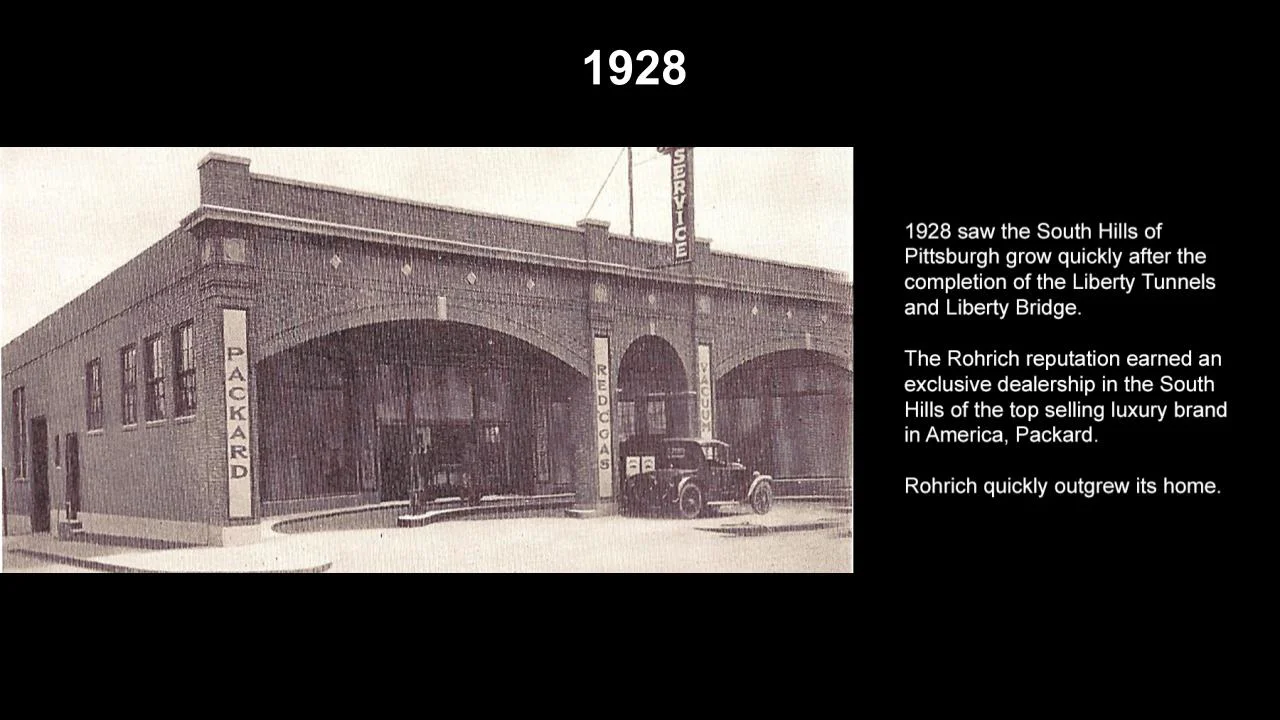
By 1928, the South Hills of Pittsburgh experienced rapid growth following the completion of the Liberty Tunnels and Liberty Bridge, making the area more accessible than ever before. As the region expanded, Rohrich’s strong reputation earned them an exclusive dealership for one of the top-selling luxury brands in America at the time, Packard. This milestone marked a significant step forward for the company, but with continued success came new challenges, as Rohrich quickly outgrew its original location and prepared for further expansion.
1930 –
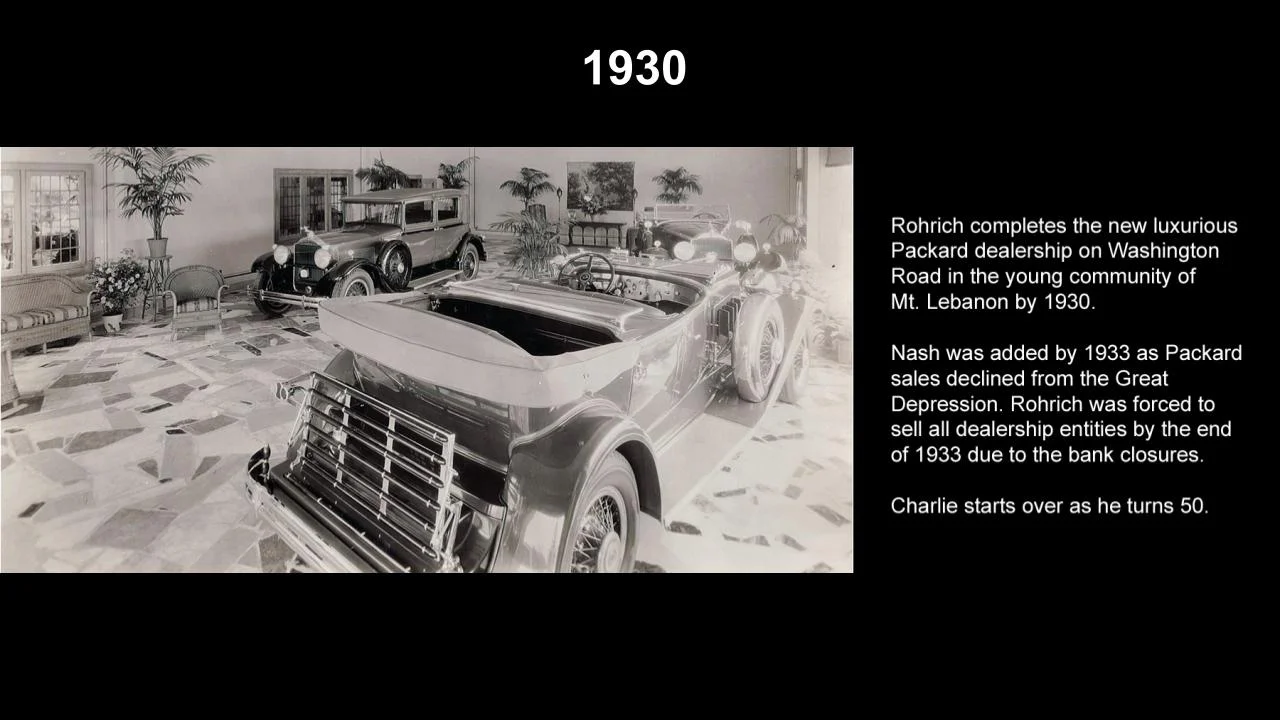
By 1930, Rohrich completed a new luxury Packard dealership on Washington Road in the growing community of Mt. Lebanon, marking another major milestone in the company’s expansion. However, the challenges of the Great Depression soon followed. As Packard sales declined, Nash was added to the lineup in 1933 in an effort to adapt to the changing market. Despite these efforts, widespread bank closures forced Rohrich to sell all dealership entities by the end of 1933. At 50 years old, Charlie Rohrich faced the difficult task of starting over once again, demonstrating the resilience and determination that would continue to define the Rohrich legacy. 
1934 –
1938 –
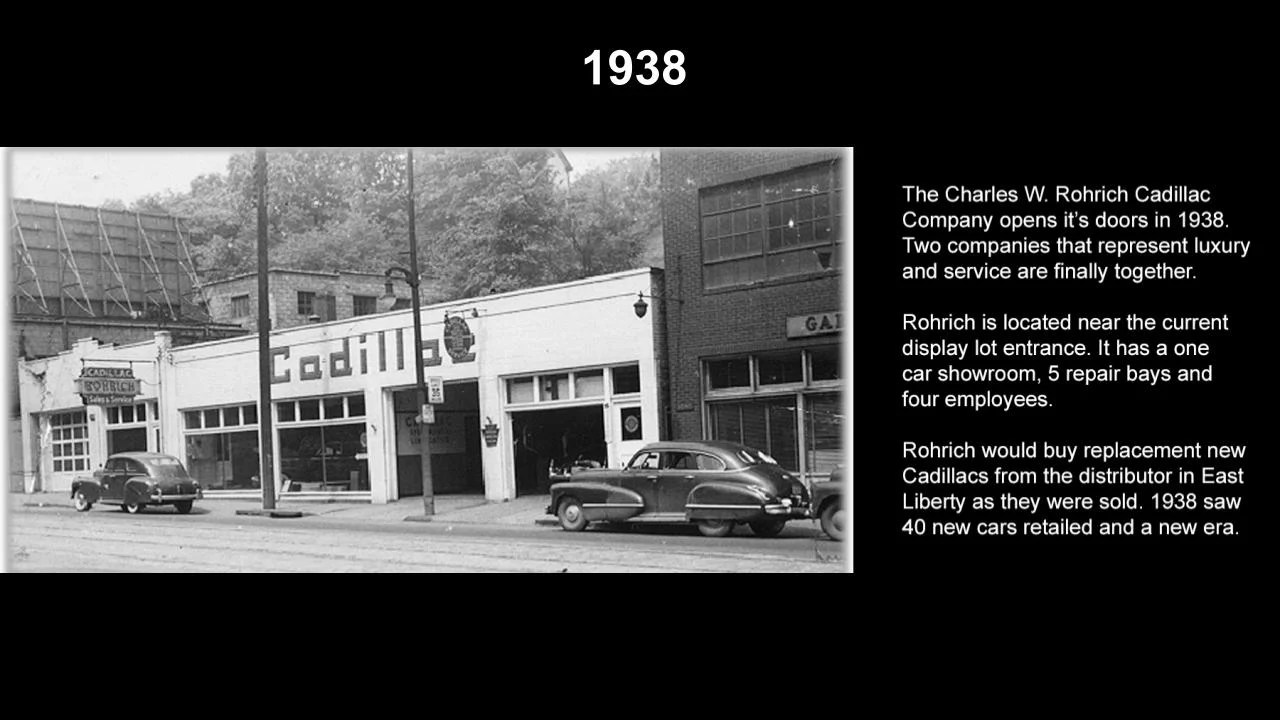
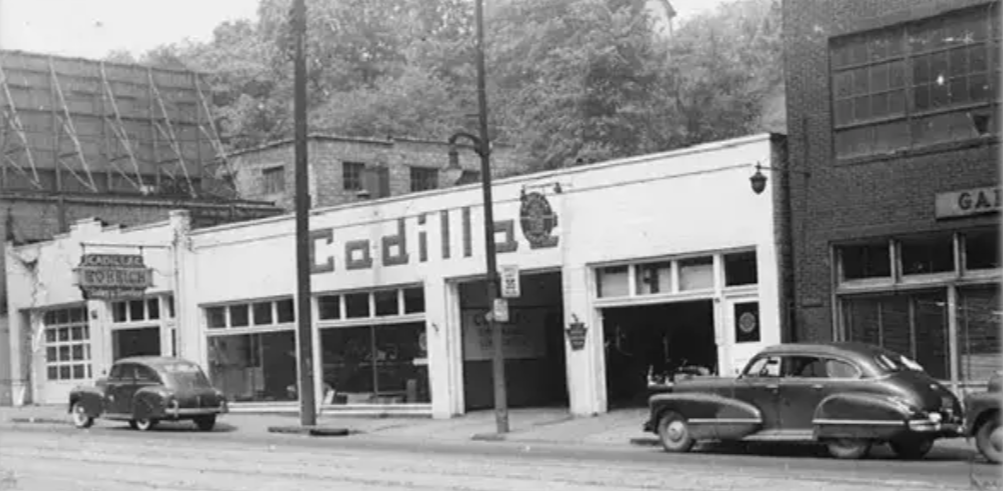
In 1938, The Charles W. Rohrich Cadillac Company officially opened its doors, bringing together two names synonymous with luxury and exceptional service. Located near what is now the current display lot entrance, the dealership began modestly with a one-car showroom, five repair bays, and a team of four employees. As demand grew, Rohrich sourced replacement Cadillacs from a distributor in East Liberty to keep up with sales. That year marked a turning point, with 40 new vehicles sold and the beginning of a new era for the Rohrich Automotive Group.
1943 –
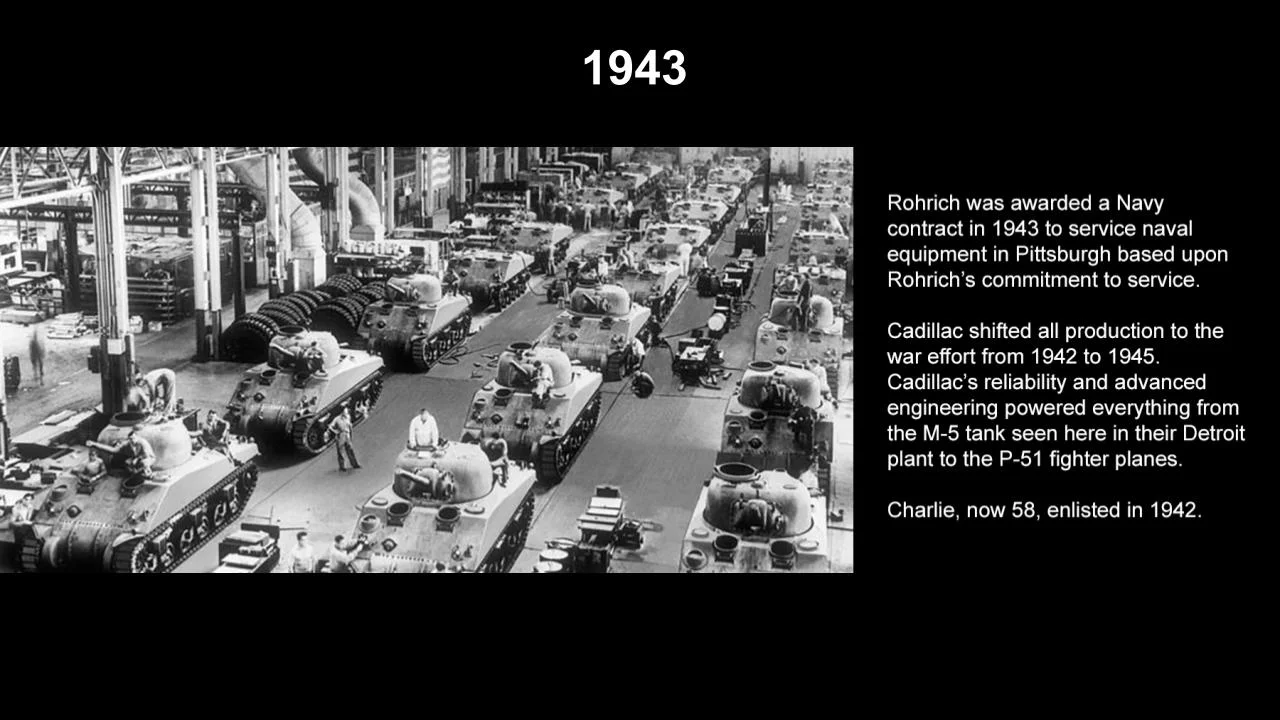
In 1943, Rohrich was awarded a Navy contract to service naval equipment in Pittsburgh, a testament to the company’s strong reputation and commitment to service. During this time, Cadillac had shifted all production to support the war effort from 1942 to 1945, contributing advanced engineering to military equipment such as the M-5 tank and P-51 fighter planes. Demonstrating his continued dedication, Charlie Rohrich enlisted in 1942 at the age of 58. This period marked a powerful chapter of resilience and patriotism for both the company and its founder.
1950 –
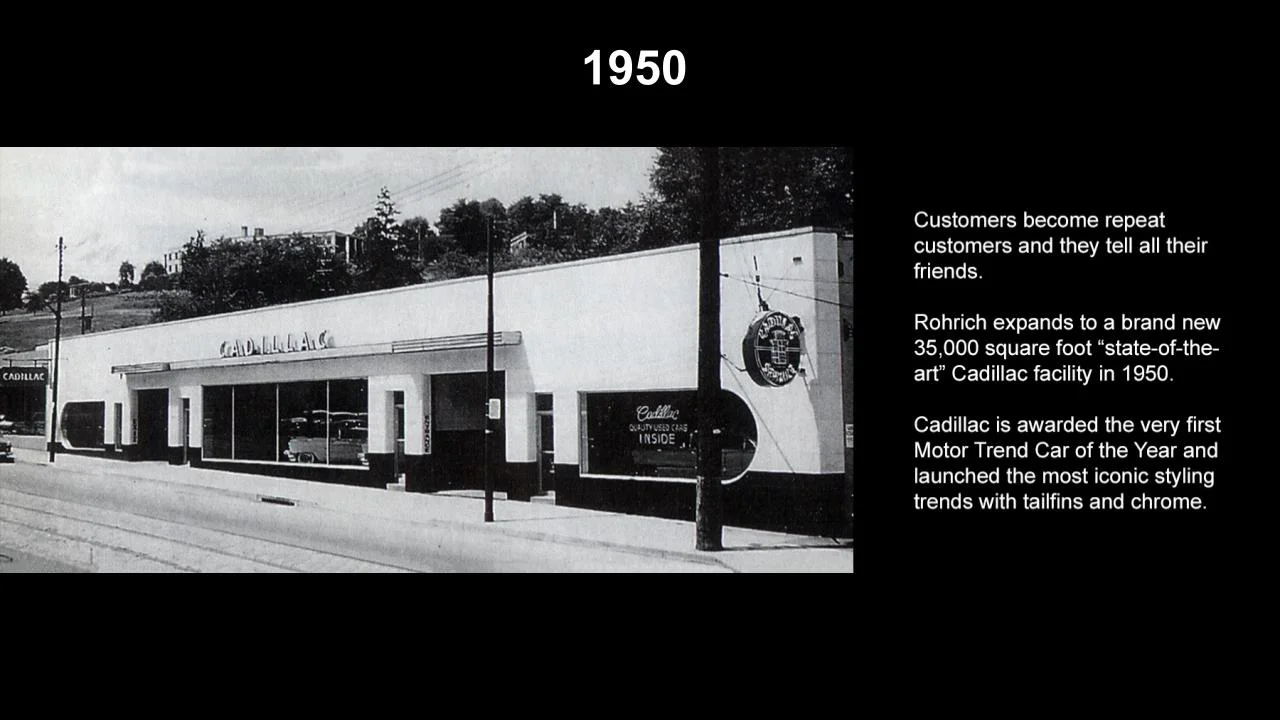
By 1950, Rohrich’s dedication to exceptional service had built a loyal customer base, with satisfied clients returning again and again and recommending the dealership to friends and family. That same year, Rohrich expanded into a brand-new, 35,000-square-foot state-of-the-art Cadillac facility, marking a major milestone in the company’s growth. As Cadillac gained national recognition, earning the very first Motor Trend Car of the Year award and introducing iconic styling elements like tailfins and chrome, Rohrich was positioned at the forefront of a rapidly evolving automotive era.
1953 –
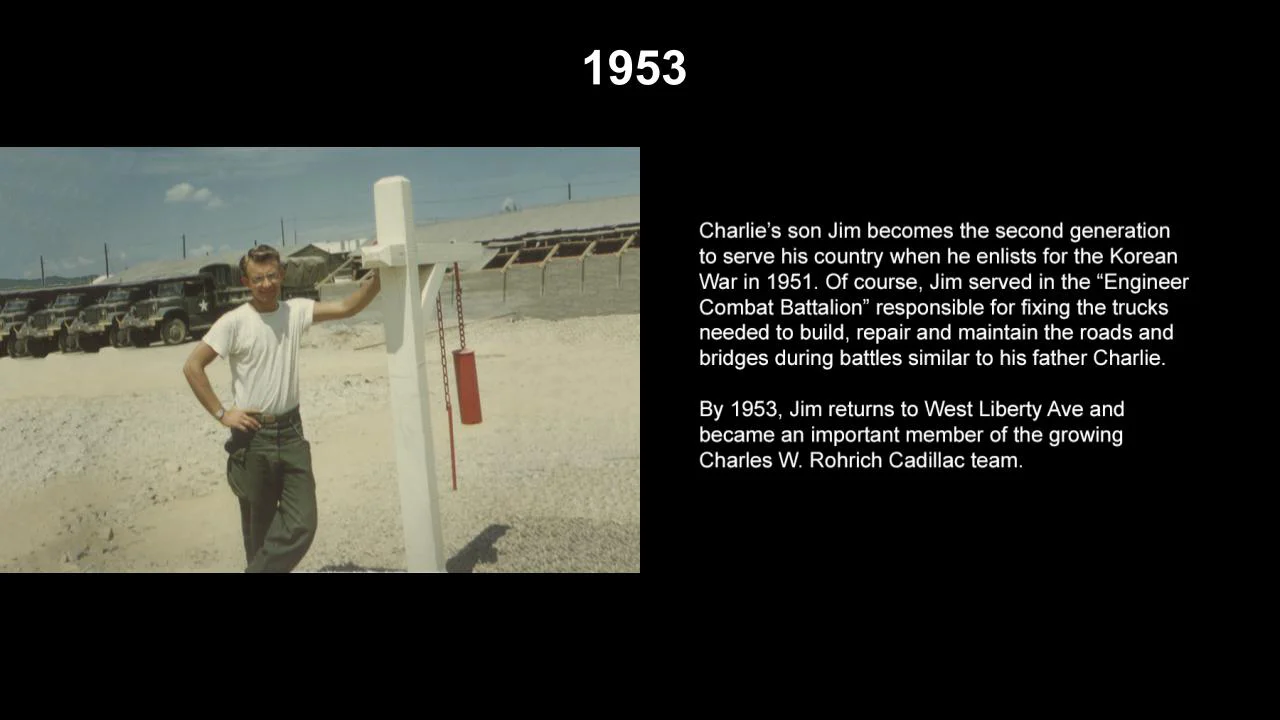
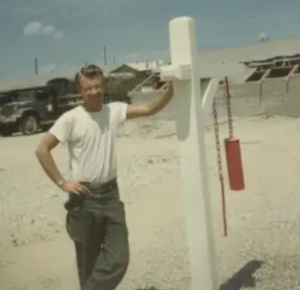
In the early 1950s, the Rohrich legacy continued into the next generation as Charlie’s son, Jim, enlisted in 1951 to serve in the Korean War. Following in his father’s footsteps, Jim served in the Engineer Combat Battalion, where he repaired and maintained trucks used to build roads and bridges during wartime. By 1953, Jim returned home to West Liberty Avenue and became an integral part of the growing Charles W. Rohrich Cadillac team, helping to carry forward the family’s commitment to service and excellence.
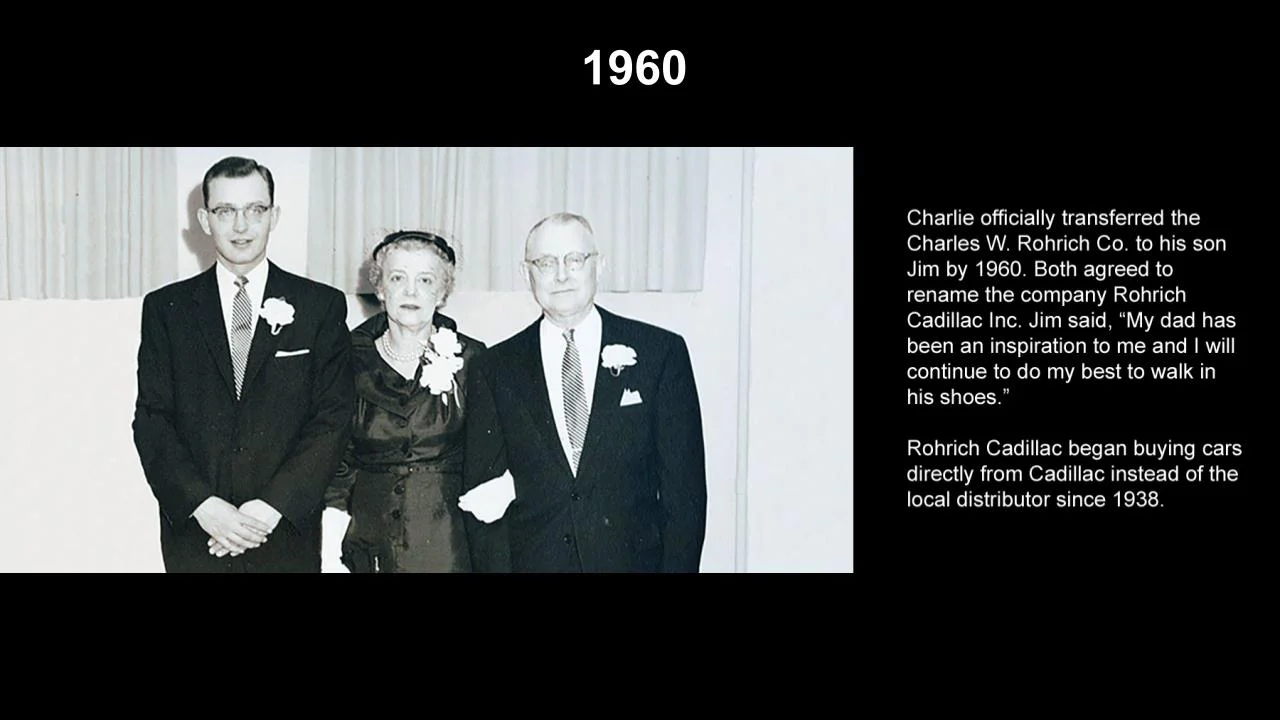
1960 –
By 1960, Charlie Rohrich officially passed the torch, transferring ownership of The Charles W. Rohrich Company to his son, Jim. Together, they rebranded the business as Rohrich Cadillac Inc., marking a new chapter for the family legacy. Jim embraced the responsibility with pride, honoring his father’s influence and committing to uphold the same values of hard work, integrity, and customer service. Around this time, Rohrich Cadillac also began purchasing vehicles directly from Cadillac rather than relying on a local distributor, further strengthening its position in the automotive market and setting the stage for continued growth.
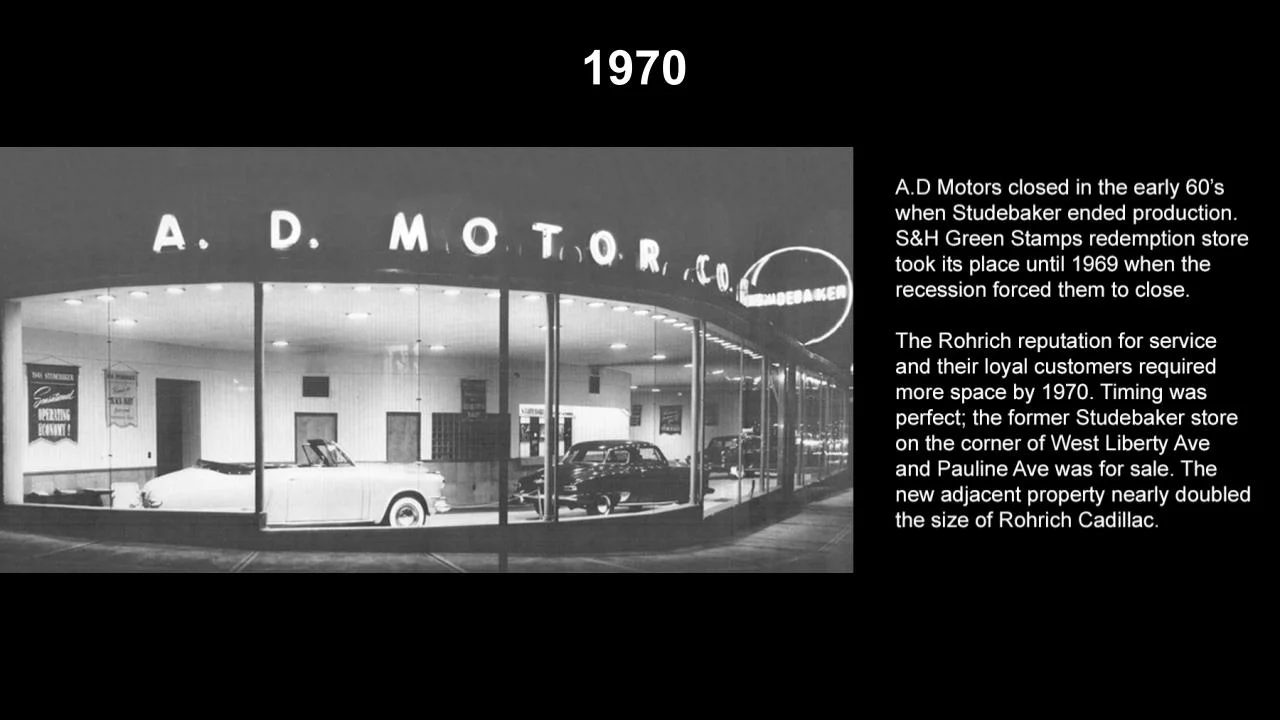
1970 –
By 1970, changing times and new opportunities led to another period of growth for Rohrich. After A.D. Motors closed in the early 1960s following the end of Studebaker production, the space was briefly occupied by an S&H Green Stamps redemption store until it too closed during the 1969 recession. As Rohrich’s reputation for service continued to grow alongside its loyal customer base, the need for more space became clear. The timing proved ideal, as the former Studebaker location at the corner of West Liberty Avenue and Pauline Avenue became available. Acquiring this adjacent property nearly doubled the size of Rohrich Cadillac, allowing the business to expand and better serve its customers.
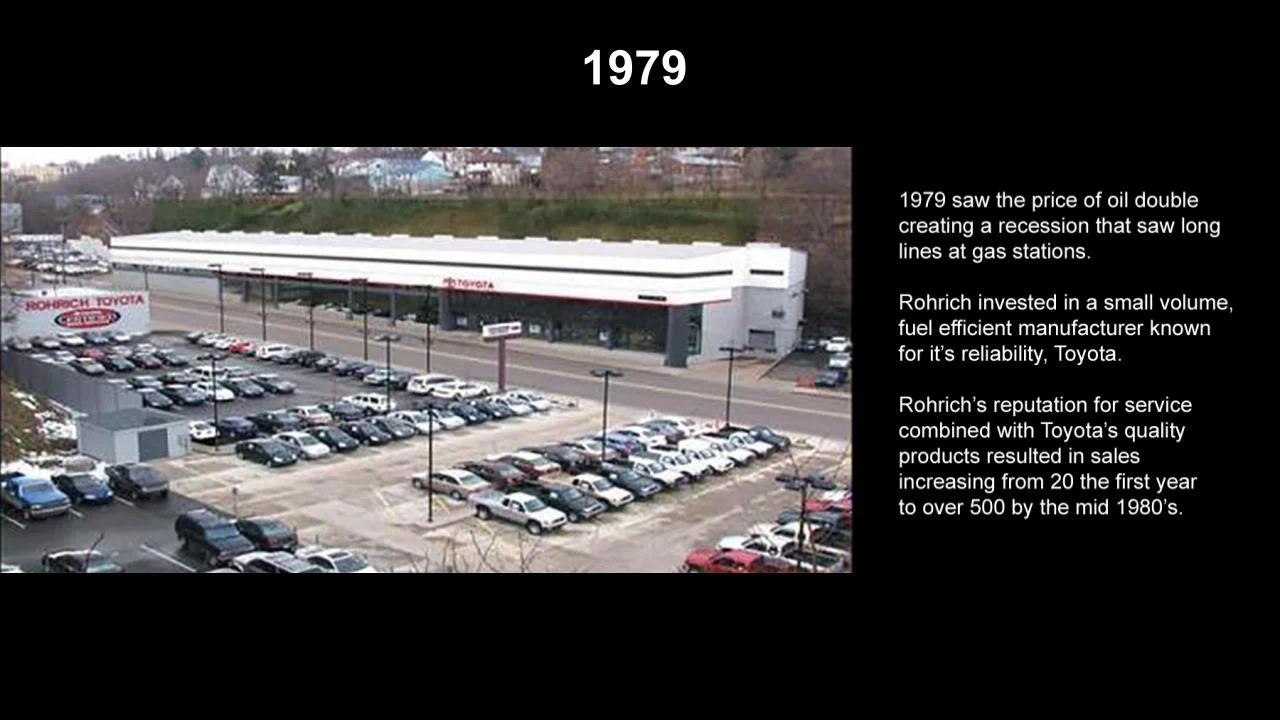
1979 –
In 1979, rising oil prices led to a recession and long lines at gas stations, changing the way consumers thought about vehicles. Recognizing this shift, Rohrich made a strategic investment in Toyota, a smaller manufacturer known for producing reliable and fuel-efficient cars. This decision proved to be a turning point, as Rohrich’s strong reputation for service combined with Toyota’s quality vehicles drove significant growth. Sales increased dramatically, rising from just 20 vehicles in the first year to more than 500 annually by the mid-1980s, marking another era of innovation and success for the company.
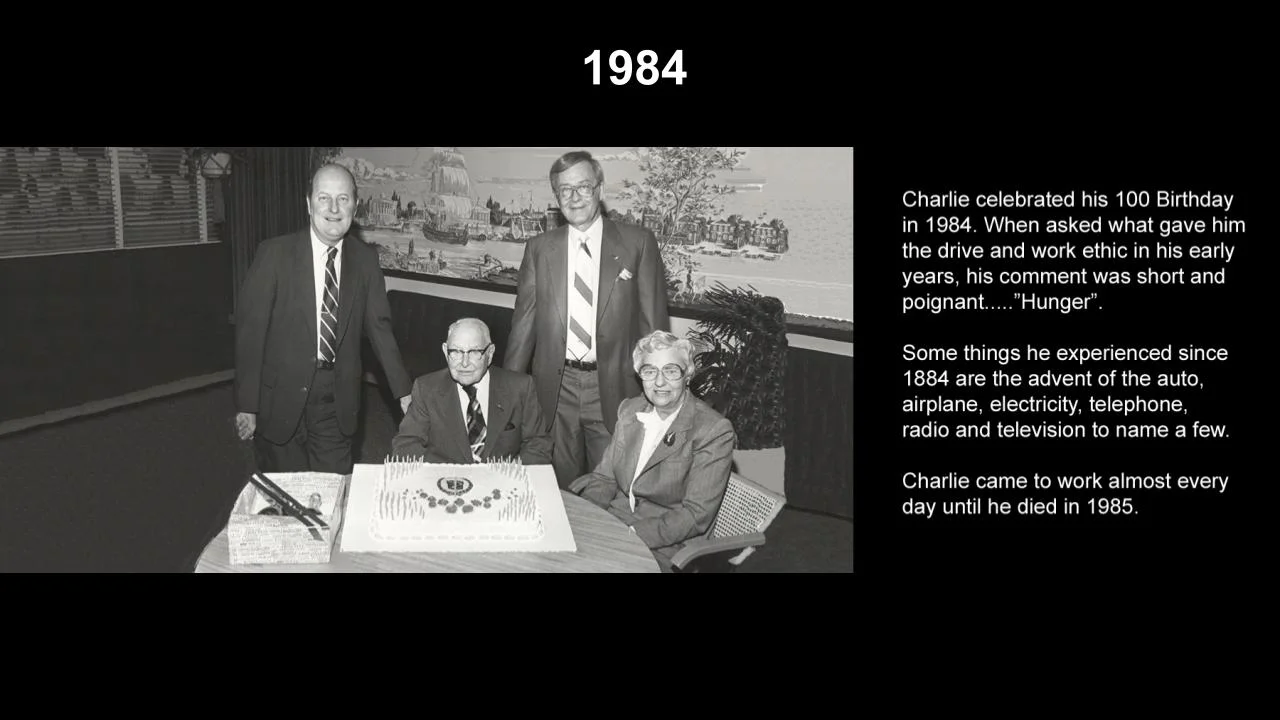
1984 –